DON SHIFT.COM
  • Home
  • Books
  • Blog
    • Ventura County Blog
  • Nuclear Survival
  • Riot Defense
  • Night Vision
  • Home
  • Books
  • Blog
    • Ventura County Blog
  • Nuclear Survival
  • Riot Defense
  • Night Vision
Search
Picture

Nuclear Survival in the Suburbs: Non-fiction
Picture
"How do I survive a nuclear war? I live in a wood frame tract house!" you may be thinking. It IS possible to survive nuclear war without an underground shelter. You don't have to despair if the global instability on the world stage comes to that. A highly overlooked defense against radiation is the inverse square law. Basically, if you can get inside and 10 feet away from the radiation outside, the dose you will be exposed to will be only 1%. This is why you’re told to get into the center of a building. If the radiation level is low enough, even sheltering in the center of a joisted masonry or wood framed slab on grade house can be effective.

Surviving a nuclear attack doesn’t have to be a matter of luck. Learn:
—What likely nuclear targets are how to calculate your risk.
—The kinds of nuclear weapons that might be used and the damage they may cause.
—How to take advantage of the inverse square law.
—How to turn household items into radiation shielding.
—Tips to make your basement a better shelter.
—Why radiation exposure may not be a death sentence.
Buy a copy today
Free nuclear survival info
Picture
Buying Guide to Radiation Detectors ("Geiger Counters")
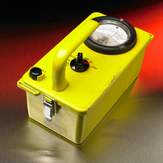
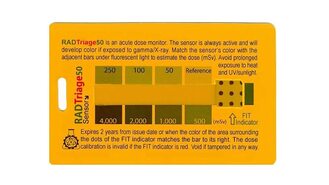
​Why should you have radiation measuring equipment? There is no way to “gauge” radiation levels without instruments. That leaves a survivor at the mercy of local emergency services and the federal government/military to provide regional radiation levels. Many civil defense programs have been utterly gutted and focus on higher-probability, lower impact events such as tornados and floods. A nuclear war quite probably will leave you on your own for radiation readings.
​

Excerpt-Nuclear War is Survivable

Over the last few years, nuclear war has crept back up on the horizon for Americans after an absence of over thirty years. Once again, the fears of the early ‘80s and the days of the Eisenhower and Kennedy Administrations are here again. Except now, civil defense is remembered as memories of duck and cover, quirky videos, and aged pamphlets. 9/11 focused on terrorism and the pandemic highlighted the fragility of our supply chain. A nuclear attack would take the horror of 9/11, the disarray of the pandemic, and the breakdown of everything after Hurricane Katrina and drop it all at once into the lap of every American.
​
Here we are again. As King Solomon said, “there is nothing new under the sun.” The lack of government preparations, education, and fallout shelters may seem alarming to someone who is picking up this book for the first time. Nuclear war has always seemed unsurvivable and the worst of all disasters a person could encounter. Rather than the “can do” attitude that Civil Defense pushed for decades ago, futility and fear seem to be the main reaction of the public today towards nuclear attack.

You don’t have to despair. Survival is possible for those without shelters and basements. Being vaporized in a thermonuclear fireball doesn’t have to be your fate. Even fallout doesn’t have to be a death sentence. However, to survive you cannot stick your head in the sand and hope it doesn’t come to nuclear war. By reading this book you are taking the first steps to being able to overcome any fears and survive.
 
Targeting
Major cities with metropolitan populations of one million or more are the likely targets for nuclear weapons. This is a strategy known as countervalue targeting where an adversary is deterred from attacking (or using nuclear weapons themselves) knowing that their civilian population would be nuked. American strategy attempted to move away from this, but it is probable that China, North Korea, and Russia would go after a number of large American (and European) cities.
Nuclear weapon doctrine began as an outgrowth of strategic bombing, born in the 1930s and perfected in the 1940s. The goal was to kill civilians (and morale), destroy war materiel producing factories, and associated military targets. Bombers with massive multi-megaton early thermonuclear bombs (“city busters) would target major cities and industrial targets.

Destroying only military bases and nuclear missile silos is known as counterforce targeting. China and North Korea simply don’t have the arsenal to take out American nukes, hit military bases, and have a credible reserve left over for a second strike or for deterrence against a third party. This means their limited weapons are best used to force the US to choose between continuing the fight and having American cities be nuked. Russian does have the warheads to hit counterforce targets and major cities.

Compared to the ‘50s and ‘60s, the situation is slightly better. Cities would be targeted with probably fewer warheads of smaller yield[1], resulting in less dead and less radiation. The goal of a nuclear attack would be to get the other guy to surrender or agree to a cease fire, not completely erase his military and industrial capacity. Or “bomb them back into the Stone Age,” as General LeMay put it. Those living away from major military targets and big cities stand a good chance of surviving.
Picture
Airbursts 
To destroy cities, an airburst is ideal. A bomb detonated at altitude maximizes its downward “punch” from the shockwave and thermal effects over a larger area. Airbursts are the most likely way a city would be targeted to get the maximum amount of destruction. They are far more efficient than detonating a bomb at ground level where much of its force is wasted. At the proper height and warhead yield, the fireball never touches ground and fallout is minimized—close to non-existent per a lot of sources.

Radiation in these cases is limited to generally directly under the explosion where the initial burst of radiation irradiates everything underneath it. Note that this airburst radiation does not produce fallout. The nuclear fission reaction going on in the explosion zaps downward into the ground in immediate proximity of the fireball. Once the reaction is over, the irradiation stops. Radiation is not contagious to people or particles, so unless the ground and debris beneath is moved, there will be little contamination. If you aren’t near an airburst’s ground zero, radiation poisoning isn’t much of a worry.

Though no major fallout occurred in Hiroshima and Nagasaki, the thermal and blast effects were awful. Modern American cities would be just as vulnerable. Fire and blast would be the big killers. So don’t live next to a military base or in the center of a city. Rural residents have an advantage here.

Nuclear fallout is earth and debris that is sucked up through the fireball into the fission reaction as it is happening. Radioactive particles fall back to earth; heavier particles fast and locally and lighter ones further away. Fallout is not like a disease and it is not contagious, nor does it make other stuff radioactive. However, it contaminates things as the particles stick onto or get into other things, just like dust does. It can be cleaned off (in theory).

Fallout is not a given. Appreciable fallout only comes from ground bursts. Ground bursts displace a lot of soil and debris that becomes radioactive fallout. Such an impact would be necessary to destroy hardened missile silos and military facilities. We’re unlikely to see these outside of the missile fields of the Midwest or away from major underground bunkers.

Fallout from these impacts would carry to the north and west generally as they follow the prevailing wind patterns. Areas of additional concern would be near Vandenberg SFB, although they do not have nuclear weapons there, Air Force and Navy bases with nuclear weapon storage areas, and very important military locations with hardened shelters, like Omaha and the Washington DC area. Locally heavy fallout requiring shelter would not be a major concern for most Americans away from these risk areas.

Fallout is also generally directional. Again to avoid fallout, you don’t want to be north or east of a nuclear target. Basically anywhere that is downwind. Yes, wind patterns shift. A juvenile book After the Bomb was set in LA and a major plot point was that the single bomb, launched by accident, impacted during a Santa Ana wind event. That meant for several days, the fallout was being pushed out to sea before the wind pattern reversed and blew it back inland.

For most targets, ground detonated weapons will probably be <300 kilotons, not multi-megaton warheads. Large yield warheads would be reserved for the presidential bunker, NORAD, and similar ultra-hard facilities. Those close to a surface burst, but upwind, might not have to worry too much about fatal fallout requiring a shelter. Even so, hoping the wind doesn’t shift is not a plan.
To recap, a nuked city is likely to get an airburst, which means that although the center of the city will be annihilated, fallout will not occur. Those living in the suburbs should be okay. Those downwind of underground facilities will need to worry about fallout and the Northeast United States will be exposed to fallout, either heavy in intensity and from a near source or lighter intensity as it travels on the wind. Rural, upwind individuals will likely experience no major ill effects any different than a standard total socioeconomic collapse situation[2], aside from higher cancer rates as worldwide radiation increases.

If you think you might be downwind, consider stockpiling sandbags to build a shelter. Do a little research on how to create air filters, what targets you might be living by, and keep stacking your long-term storage food. Keep materials like plastic sheeting to seal windows and openings in your home. If you have a bugout location, plan ahead to get there in time.
Surviving radioactive fallout with this one little trick! 
“But I don’t have a basement or brick walls, let alone a fallout shelter!” you might be thinking. Expedient fallout shelters can be made pretty easily and you may not even need one if the radiation level outside is low enough (though shielding is highly desirable). Radiation, like any energetic particle, can be defeated by dense materials or distance.

Dense materials, known as shielding, attenuates radiation by robbing it of energy as it collides with the atoms of the substance. Lead is preferred for this because it is so dense that you don’t need much of it, and compared to other super heavy metals, it is very cheap. However, lead is impractical for the homeowner and so are several inches of steel.

I recommend building a shelter inside the home using dirt from outside placed into sturdy containers. Like making a pillow fort, a small shelter that a family could lie in for a few days until the radiation has decayed from its most intense rate can easily be made in the center of a house. Plastic tubs, boxes, trash cans, and proper sandbags can be the walls.

Simply keeping your house free of fallout and getting to the very center can cut your radiation exposure by up to 99% if you can get just 10 feet away from the outside. Starting with distance, radiation decreases in strength the further away that you are; this is known as the inverse square law. So two feet from a radioactive source of 100 R/hr, gives you 25 R/hr. At ten feet, 100 R/hr coming through the wall is 1 R/hr ten feet away.

Unfortunately, when it comes to fallout contaminated sources like the roof or ground outside, it is not so simple. For nebulous reasons, radiation from such planar sources will not fall off with the inverse square of the distance. Regarding linear sources,
 
“The inverse square law becomes inaccurate close to the source (i.e., about 10 times the diameter of the source)…The inverse square law holds true only for point sources; however, it gives a good approximation when the source dimensions are smaller than the distance from the source to the exposure point.”[3]
 
At near distances, "the exposure rate falls off a little slower than 1/d (i.e. not as quickly as a line source). As the distance from the plane source increases, then the exposure rate drops off at a rate approaching 1/d2."[4] So the inverse square law, as you are well removed from the source, is grossly approximate.

So the above calculations should be illustrative of the principle rather than definite facts or a formula one should use. The inverse square law should be seen, in the context of nuclear fallout contamination, as a generic understanding of how distance contributes to the reduction of a radiation dose, not as an iron-clad rule. Basically, to get the one percent at ten feet benefit, in a fallout situation you have to be very far away.

Even so, there will be a significant reduction with increasing distance, enough that in low radiation count areas sheltering-in-place is viable. A very large building, like an office or church, may be a better choice than a home. Those in homes without a basement are best served by relying on improvised shielding in the center of the house.

Typical American homes, on the first floor, may have an unshielded PF of 2-5. That is, inside the radiation is one half up to one-fifth of the radiation outside. For example, 100 R/hr outside could be 50 R/hr to 20 R/hr inside. To take advantage of the protection of distance, shelter should be sought in the part of the house that is furthest from the outside; the most interior portion, both vertically and horizontally. For some this could be a large room, the inside corner of a room, a closet, or a hallway.

The way distance alone works is that the photons of the gamma radiation is spreading out as it travels making it less concentrated and thus less likely to hit you. The lower the concentration, the less intense the radiation. There is more space than there are photons so what is happening is the chance of being struck is decreasing as you move away from the source. Imagine the radiation is like birdshot from a shotgun. Eventually, the pattern of the shot will spread out so much that the odds will get higher and higher for a duck to actually get hit.

Literally getting further away from the radiation outside can mean the difference between life and death. Civil defense advice has long told survivors to get to the center of a building, the larger the better, but never why. In buildings that are large enough, one could be effectively isolated from any consequential radiation exposure without any meaningful shielding
Once you understand the inverse square law the advice to go to an interior room or hall and hide underneath a mattress doesn’t sound so stupid. Lower overall radiation outside really helps enhance survivability, but the point is if you can get well away from the fallout and keep the house sealed against it getting in, fallout doesn’t have to be a death sentence if you are above ground without shielding.

A combination of distance from the outside (including from fallout on the roof; stay on the ground floor) and improvised shielding suddenly means lots of people who otherwise might die won’t. Now you’re better off underground but digging a shelter in the yard is probably out of the question, especially as many modern new-build tract homes don’t even have yards to speak of.

Here’s another cool thing about fallout physics; for every seven-fold passage of time, radiation decreases in strength by a factor of ten, known as the “seven-ten” rule. This is sort of like marginal tax rates. Radiation weakens with time, but the dose adds up over the hours. If radiation remained constant, an initial 10 R/hr exposure would be a potentially fatal 240 R after a day. In reality, it’s only 40 R and in 49 hours, only 43 R. At that level, probably no effects would be noticed for years or decades.


[1] Yield is the explosive strength of the bomb, measured in kilo- or mega- tons of TNT.

[2] Which in and of itself will be no picnic.

[3] Dept. of Energy publication (DOE-HDBK-1122-99)

[4] Ibid.
Buy a copy today
The information herein does not constitute legal advice and should never be used without first consulting with an attorney or other professional experts. No endorsement of any official or agency is implied. If you think this is in any way official VCSO business; you're nuts. The author is providing this content on an “as is” basis and makes no representations or warranties of any kind with respect to this content. The author disclaims all such representations and warranties. In addition, the author assumes no responsibility for errors, inaccuracies, omissions, or any other inconsistencies herein. The content is of an editorial nature and for informational purposes only. Your use of the information is at your own risk. The author hereby disclaims any liability to any party for any loss, damage, or disruption through use of the information. Copyright 2023. As an Amazon Associate I earn from qualifying purchases. Donut icons created by Freepik - Flaticon​
  • Home
  • Books
  • Blog
    • Ventura County Blog
  • Nuclear Survival
  • Riot Defense
  • Night Vision