DON SHIFT.COM
  • Home
  • Books
  • Blog
    • Ventura County Blog
  • Nuclear Survival
  • Riot Defense
  • Night Vision
  • Home
  • Books
  • Blog
    • Ventura County Blog
  • Nuclear Survival
  • Riot Defense
  • Night Vision
Search
Picture

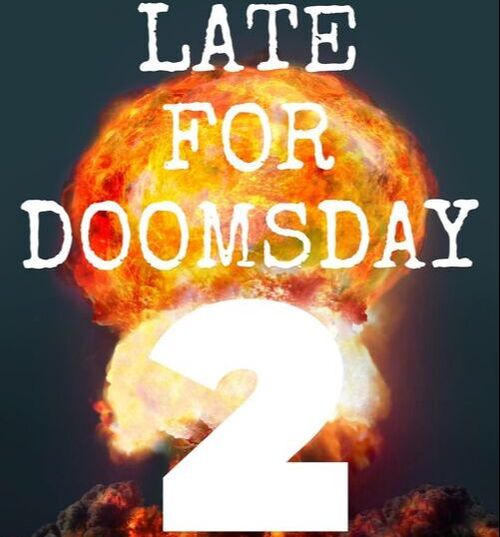
Late For Doomsday 2

Picture
You might survive a nuclear attack, but would you survive the aftermath? Two friends have a choice: stay in the city and take the chance that they are not pummeled by nuclear warheads or take their chances in the Mojave Desert. Only when it is too late do they make the decision to head for the safety of a friendly ranch, the new home of brothers Sheldon and Ellis from the prequel. 

The two friends watch as Las Vegas perishes in nuclear fire and must fight their way through a the scared and dangerous evacuees of a two million person metropolis. On their way, they must find shelter in the inhospitable desert before the incoming wave of fallout arrives. Meanwhile, desperate Chinese commandos are somewhere roaming the countryside. 

In the follow-up to Late For Doomsday, this sequel examines what a counter-value nuclear strike against a major city would look like and what it would take to survive it. This thrilling tale includes a realistic portrayal of a nuclear attack on the homeland, how a homestead may be vulnerable after SHTF, and even armed drone warfare. Follow Noah and Ben to their friends' ranch and find out if survival in the dry post-apocalyptic Mojave is possible. 

Late For Doomsday

Excerpt: ​Chapter 1

It was hard to think that three nights after WWIII reached a nuclear crescendo that the evening could be so peaceful. The desert air was still, allowing the scent of juniper and sagebrush to diffuse in the cooling air. Crickets were chirping. Inside the house, familiar domestic sounds and cheerful voices made their way outside. All the way across the canyon a muffled moo from one of the cows confined to the barn for their safety could be heard.
            The two Caruthers brothers were reunited after several days of assuming the other was dead. Both had harrowing tales of survival that would likely haunt them in the nights to come. For the moment, they were safe and had better odds of survival than most Americans. It was a time to stop and give thanks.
            Tuesday morning a nuclear war erupted and Sheldon made it out of town in the nick of time. Thanks to his girlfriend turning off the TV, he fell asleep and missed the very start of the attack and lost potentially thirty extra minutes to do something about it. Ellis was hoping to leave the next day after his wife took the bar exam. Instead, he and she had to make use of an ad hoc fallout shelter in their crawlspace.
Sheldon and Ellis sat down on the porch of their family’s ranch house to take in the twilight. Each cracked a beer and observed the fading red glow on the western horizon above the hills. The sky seemed extra colorful. It could have been the dust from the recent windstorms or any combination of things, but the two brothers decided that the extra red was a byproduct of the nuclear war. It made Ellis think of Edvard Munch’s painting The Scream, where the otherworldly sky was due to a historic volcanic eruption.
            Radiation was now negligible. Only a small number of the nuclear weapons dropped on Los Angeles and San Diego were surface bursts. Airbursts, the majority of the warheads’ delivery method, created damage over a wide area but practically no fallout. As a result, Sheldon, his girlfriend, and her three roommates all were able to beat the fallout as it drifted to the northeast into the Mojave Desert where they all made their new home.
            The Caruthers’ ranch sat deep in the desert in a narrow valley in some of the highest peaks east of the coastal ranges. They were smack in between Las Vegas and Los Angeles. It was as remote as anyone could get outside of Alaska. Normally, their only neighbors were miners and vacationers scattered around the Mojave National Preserve.
            This was a moment of somber reflection on the tight escapes the two brothers made and the loved ones they lost. The afternoon had been spent burying the family’s long-time caretaker and foreman, Ezra. He died of an apparent heart attack earlier that morning compounding their personal losses. The boys’ last close relative, their uncle, was almost certainly dead in his retirement home in San Diego. Their cousins were stuck in Montana, if the fallout from the missile fields at Malmstrom AFB didn’t get them.
            ​Ellis flung a bottle cap into the dirt like a miniature Frisbee. “What a kick in the nuts about Ezra. After everything this week, I sure could have used another familiar face.” Losing Ezra was worse than losing his uncle. At least Ezra still had some quality of life and plenty of years ahead.
            “And that takes us down a man,” Sheldon said. “Everything around here just got a little bit harder. More work for us, fewer tips and tricks, and one less person to guard the place with.”
            The ranch itself was difficult work for one man. Ezra was able to manage the small cattle herd by himself with the occasional help from itinerant workers out of the distant desert towns a hundred miles away. Growing the cattle herd, for both sustenance and income, would require the girls to help. Another pair of men around here, especially ones that they could trust, would be welcome.
            On another night like this, maybe a year ago, Sheldon sat around drinking beer with two college buddies, Ben and Noah. They spent a full day of learning to rope, ride, and shoot like cowboys. They drove down from Las Vegas where they moved to open a start-up software business in the no income tax state. The three sat up late into the night wargaming such a situation out at the ranch. Sheldon extended an invitation to them in case of “Oh, I don’t know, World War III or the zombie apocalypse.”
            It was three days after the nuclear exchange and a week since they last texted, saying they were thinking about getting out of town. Though, at the time, it seemed like a long shot that Las Vegas would be nuked, it was still smart not to remain in a major population center. Vegas was surrounded by Nellis AFB, the Test Site, Creech AFB, Area 51, and the Hoover Dam. Shortwave radio was saying all those places except the dam were hit. Driving in across the Mojave and seeing the clouds on the far horizon, Sheldon thought the city had been spared.
            No. Ellis told him about the hundreds of stranded cars and RVs throughout the desert he and his wife passed on the way in. That the ranch sat a long way in on a dirt road was a good thing, but bad that desperate people who might have come out here to camp or off-road previously might remember this little oasis. The ranch was a desirable gem in an unstable world.
            “Are we going to have to decontaminate every time the wind blows?” Ellis asked. After Ezra’s burial, the day was spent using a yellow Victoreen radiation detector to identify hot spots around the house. Fallout, essentially only radioactive dust too small to discern from the regular desert dust, had to be brushed, washed, and dug from around the house. The recent windstorm caused some fallout to drift up like snow on the west side of the house.
            Granted there wasn’t much, but radiation wasn’t something you took a chance with. The porch had been swept and hosed down. The fire hose and pump got hooked directly up to the water tank and the house washed down. The slightly radioactive mud that resulted was sitting in a pile a hundred feet away. Tomorrow or the day after the brothers would fill a cart and dump it down an abandoned mine shaft.
            Sheldon was telling Ellis about his preliminary radioactive survey. Radiation was a complication of ranching and farming that they would have to factor in to their lives now. Sheldon had plenty of time to read the Kennedy-Eisenhower Era pamphlets from the USDA and Civil Defense on radioactivity and agriculture. Forget about learning how to repair a tractor or shoe a horse; four generations worth of farmers and ranchers would have to concern themselves with things like strontium-90.
            “The danger now,” Sheldon said, “is in the soil. The contaminates, radionuclides they’re called, get absorbed by plants and from there into our bodies via our food. Biological life, whether animal or vegetable, can’t distinguish the radioactive elements from similar nutrients. Calcium or strontium, the body absorbs it all the same.”
            “How much radiation will we get?”
            “Radiation? It’s basically a non-factor now except for what we might ingest. All the really hot stuff is gone. That whole pile over there is giving off five rads an hour.”
            “Five, huh?” Ellis said. “The Army estimated we took probably 50 in the shelter and on the drive evacuating. How bad is 50 rads, really?”
            “You’re going to be shooting blanks for a while. Lower resistance to infection and greater difficulty in wounds clotting. That’s about it. Higher overall lifetime cancer risk.”
            “I’m already close to halfway in the grave,” Ellis said dismissively. Post-apocalypse mortality had to be accepted fatalistically. They were alive when millions were not and barring an accident or invasion of the ranch, would be alive in a year or two when most of the population had starved to death.
            His wife Jess was not so sanguine. As she and Ellis sheltered beneath the house, her two friends, almost debilitated by radiation sickness, let themselves in the front door with a spare key. Fearing contamination. Ellis refused to allow them into the small shelter. It was a hard, terrible choice. Jess would never forgive him for letting her friends die like they did nor allowing her out to provide any kind of comfort.
The three were all scheduled to take the bar exam that morning. The college sat a few miles from the navy base. As part of the strategy to deny the US any viable West Coast ports to continue the war, the base received a Chinese nuclear warhead. The warhead detonated at the surface which created a huge plume of fallout. Heavy, irradiated pieces of concrete and steel from vaporized ships would have rained down within that distance.
            “Jess and I assumed they sheltered in place.” That was the official advice that went out. Remaining in a building during the beginning of a fallout event—the most radioactive time—was generally the correct thing to do.
            “At the college? Depending on the yield, the shock wave probably blew out windows. Structural damage too. Certainly couldn’t shelter in a building. Depending on the wind at the time, a hundred to maybe a thousand R an hour.”
            “R?”
            “Roentgen. Easier than flipping back and forth between the different units of radiation. REM, RAD, Sievert, etc.”
            “Ah.” Clearly sheltering in place hadn’t been the right thing to do. Ellis bet that everyone tried huddling in the windowless bathrooms first. Then fire or something must have scared them out of there. Jess’ friends likely drove or walked part of the distance totally exposed. In addition to the fatal organ damage from the radiation their skin had been burned by direct contact with fallout particles.
            “You probably could have gone up and done something minimal for them. The radiation wouldn’t have been so bad in the house.” Sheldon went on to explain that the inverse square law dictates that radiation decreases by the square of the distance from the source. With a contaminated plane like the ground outside, one had to be about twice the distance of the size of the field away before this kicked in. The depth of the radioactive field complicated the matter. Inside the house, the radiation was probably half that of the outside. A few minutes topside wouldn’t have hurt. Sheldon looked over and saw his brother’s face. His comments weren’t helping.
            If only I had known that, he thought. Except Ellis didn’t care for physics very much and was much more interested in building things. What the electromagnetic spectrum did didn’t concern him as a civil engineer who spent his day approving things like culvert designs. The situation had been as probably as close to “every man for himself” that he would ever encounter, but he still felt guilty for it.
            He opened his mouth to speak, but a car door slammed. Then another, more softly. Ellis and Sheldon froze. Inside the house, Ezra’s dog Mojo gave a single bark. Away from the city noise in the still quiet of a Mojave desert twilight, sound carried far. Next there was a tinkling rattle as person or persons unknown climbed over the inner gate. The gate was about three hundred yards away. Two minutes before whoever walked up here.
Buy a copy today
The information herein does not constitute legal advice and should never be used without first consulting with an attorney or other professional experts. No endorsement of any official or agency is implied. If you think this is in any way official VCSO business; you're nuts. The author is providing this content on an “as is” basis and makes no representations or warranties of any kind with respect to this content. The author disclaims all such representations and warranties. In addition, the author assumes no responsibility for errors, inaccuracies, omissions, or any other inconsistencies herein. The content is of an editorial nature and for informational purposes only. Your use of the information is at your own risk. The author hereby disclaims any liability to any party for any loss, damage, or disruption through use of the information. Copyright 2023. As an Amazon Associate I earn from qualifying purchases. Donut icons created by Freepik - Flaticon​
  • Home
  • Books
  • Blog
    • Ventura County Blog
  • Nuclear Survival
  • Riot Defense
  • Night Vision